

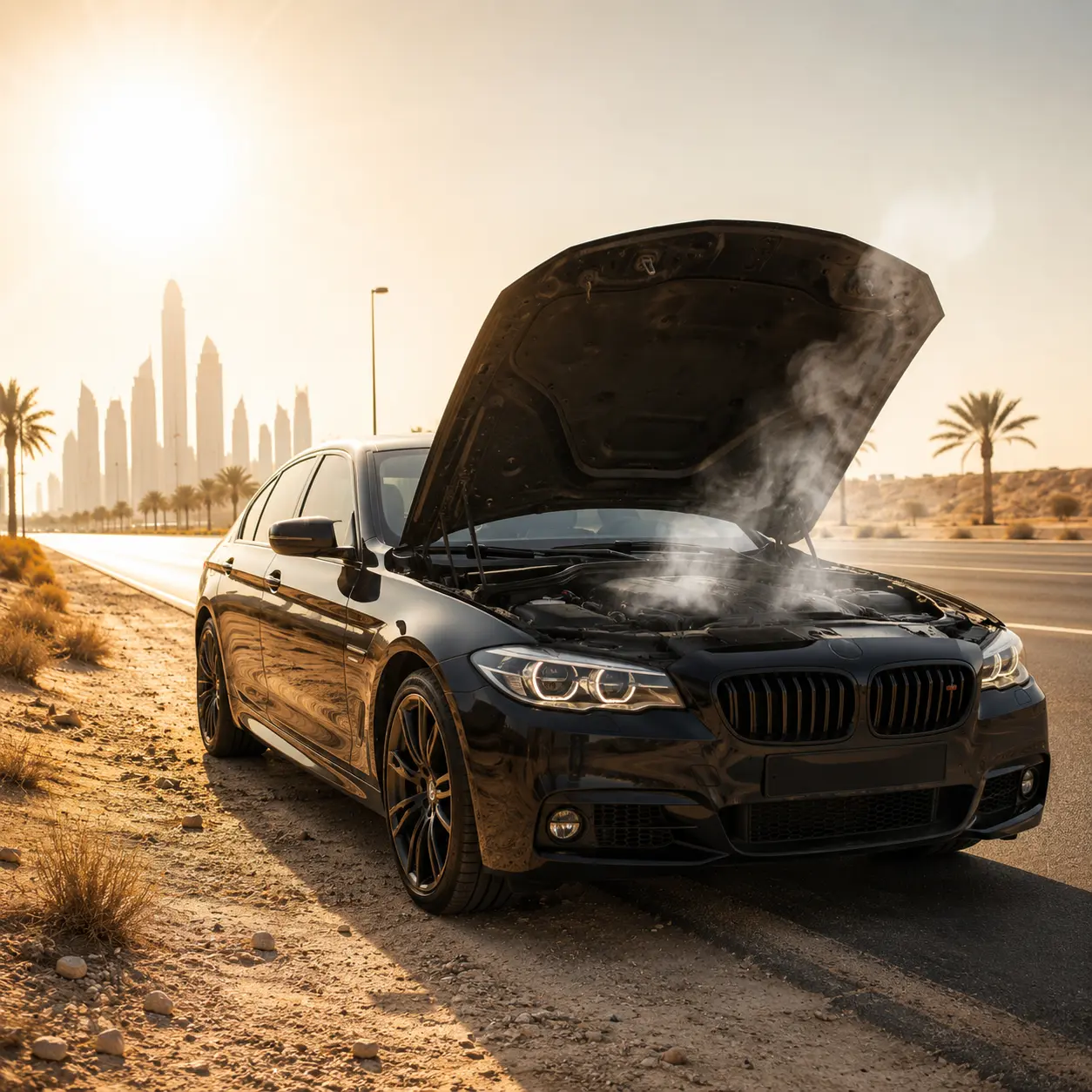
If your BMW starts running hotter than usual during a UAE summer, do not assume the weather is the whole reason. High temperatures put extra demand on the cooling system. Heavy traffic can make things harder still, especially when the car is moving slowly and there is less airflow through the radiator.
A temperature warning, falling coolant level or repeated overheating deserves attention. These signs can point to a cooling-system component that is worn, damaged or no longer working as it should. Finding the cause early can help prevent a relatively straightforward parts replacement from becoming a much bigger engine repair.
Your BMW's cooling system constantly moves heat away from the engine. During the UAE summer, it has to do that while the outside temperature is already high. Long drives add to the workload. Stop-and-go traffic creates another challenge because the car gets less natural airflow at low speeds.
That does not mean a healthy BMW should overheat simply because it is hot outside. Extreme conditions can, however, expose a cooling-system problem that was already developing. A weak water pump, ageing hose, faulty thermostat or cooling-fan issue may become more noticeable when the system is under greater strain.
What Signs Should You Watch For?
Overheating can give you clues before the situation becomes serious. Keep an eye out for:
Repeated coolant loss is particularly worth investigating. Adding coolant may bring the level back up, but it does not explain where the coolant is going. If the engine is already overheating, continuing to drive can cause damage that goes well beyond the original cooling-system fault.
Overheating does not point to one specific component. Several parts work together, so the actual fault needs to be identified before anything is replaced.
Radiator: The radiator removes heat from the coolant before the coolant returns to the engine. If it is damaged, blocked or deteriorated, heat may not be released effectively. The problem can become more obvious during a long drive or in heavy traffic.
Water pump: Coolant needs to circulate properly through the engine. A worn water pump can affect that flow and allow temperatures to rise. If the pump is failing, replacing it may be necessary to restore proper circulation.
Thermostat: The thermostat regulates coolant flow as the engine heats up. When it starts to fail, coolant may not move through the system at the right time. The result can be an engine that runs hotter than normal, especially when the car is under greater load.
Cooling fan: This component matters even more when the BMW is moving slowly. At road speed, air passing through the radiator helps carry heat away. In traffic, the fan has to provide much of that airflow. A faulty fan can therefore become a noticeable problem during hot, slow-moving drives.
Coolant hoses and expansion tank: These parts contain and carry coolant throughout the system. A cracked hose, damaged connection or leaking expansion tank can gradually reduce coolant levels. A recurring leak should be traced rather than treated as something that only needs topping up.
The coolant itself also matters. It needs to be at the correct level and suitable for the vehicle. If the level keeps falling, finding the source of the loss is more important than repeatedly adding more.
No. An overheating engine can have several possible causes, and the symptoms can overlap. Replacing the radiator when the real problem is a thermostat or water pump will not fix the fault.
This is why the cooling system should be checked before ordering a replacement. When sourcing a BMW spare part, provide the model, year and engine details. The VIN or chassis number can help confirm the correct specification when different versions of a component exist.
Genuine BMW parts, OEM components and suitable aftermarket alternatives can all be considered depending on the application. What matters is choosing a part that is correct for the vehicle and comes from a source that can provide reliable product information.
Once the fault is known, finding the correct component becomes much simpler. A supplier experienced with BMW parts can use the vehicle details or VIN to help verify the required part instead of relying only on how the old component looks.
Al-naba as a genuine automobile spare parts supplier in UAE, provides BMW replacement parts for different repair and maintenance requirements. The company also supplies original OEM spare parts for other luxury vehicle brands, helping customers find suitable components based on their vehicle's specifications.
Providing accurate vehicle information helps the team identify the appropriate component for the specific BMW before an order is placed.
BMW overheating can result from different issues within the cooling system, from coolant loss and damaged hoses to problems with the radiator, thermostat, water pump or cooling fan. Watching for early warning signs, checking the system properly and confirming the exact part required can help avoid unnecessary replacements and more serious engine damage.
Need the Right BMW Cooling System Part?
Al Nabaa Automobile Spare Parts supplies BMW spare parts in Sharjah and across the UAE, helping customers identify suitable replacement components using the vehicle model, year, engine details or VIN.
You can also email us, We will reply as soon as possible.